
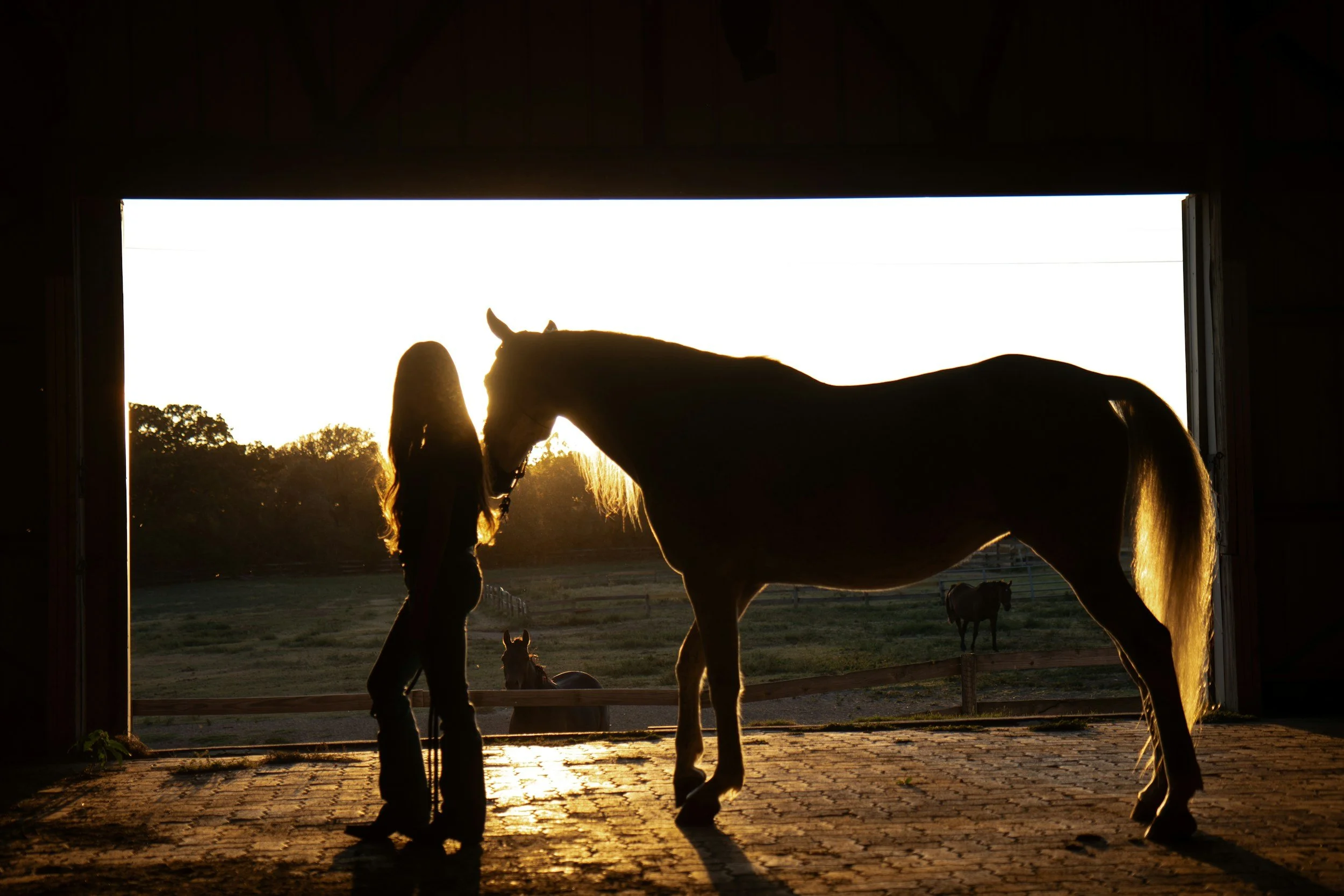
Moving to Hampton Roads with Horses: What Every Equestrian Needs to Know Before You Arrive
Moving horses to Hampton Roads on a tight timeline is its own specific category of logistics. Here is everything you need to know before you go.
If you are staring at a move to Hampton Roads, Virginia with one eye on the logistics and the other on your horse trailer, this post is for you.
Hampton Roads has a genuinely strong equestrian community — but it takes time to navigate, and time is the one thing most people in the middle of a move do not have. Whether you are PCS-ing on military orders or making a civilian relocation, figuring out which barns are actually good, which vets are taking new patients, and who the reliable farriers are can take months of trial and error after you arrive.
It does not have to.
First — Virginia entry requirements
Before your horse crosses the Virginia state line you need two things in hand:
A current Coggins test — negative EIA result within the past 12 months. If yours is expiring soon, get a new one before you move. Do not wait until move week.
A Certificate of Veterinary Inspection (health certificate) — required for interstate transport into Virginia. Your current vet issues this and it is typically valid for 30 days. Call your vet at least two weeks before your move date and time it so it is still current when you arrive.
Every reputable boarding barn in Hampton Roads will require both documents before allowing a new horse on property — even if Virginia does not require the health cert for moves within the state once you are here.
The lay of the land
Hampton Roads is not one city. It is a region covering eight separate cities — Norfolk, Virginia Beach, Chesapeake, Suffolk, Portsmouth, Hampton, Newport News, and more — connected by tunnels, bridges, and bridge-tunnels that add significant time to east-west commutes. Where you live relative to the equestrian community matters a lot.
The horse community is concentrated in three main areas:
Suffolk is the most rural, has the most horse property, the best trail access, and the lowest board prices in the region. The trade-off is distance — Suffolk can be a 35–50 minute drive to Norfolk-area bases and employers on a normal day.
Chesapeake is the sweet spot for most horse owners. More rural than Virginia Beach, closer to the bases than Suffolk, and home to a strong equestrian community with multiple boarding options, good trainers, and easy access to vets and farriers. Most people end up here for good reason.
Virginia Beach is the most suburban of the three but has solid boarding options especially in the Princess Anne and Dam Neck corridor. Best proximity to NAS Oceana and the eastern installations.
One thing most people do not account for until they are living it — the tunnels. Before you commit to a barn, drive the route from that barn to your workplace or duty station at the time you would actually be making that drive. Not on a Sunday afternoon. This matters more than people expect.
Finding a barn before you arrive
This is where most people run into trouble. The good barns in Hampton Roads fill up. Waiting until you arrive to start looking means you are competing for spots while also unpacking, enrolling kids in school, and doing everything else that comes with a move.
Start your barn search at least 60 to 90 days before your move date. Here is how to approach it:
Ask for a virtual walkthrough. A reputable barn manager will video call you and walk you through the facility — turnout area, stalls, feed room, arena. If they will not do a virtual tour, that tells you something.
Ask specifically about turnout. Hours, group versus individual, pasture quality, shelter availability. This is the most common source of frustration for people who did not ask before they committed.
Ask about their protocol for new horses. A good barn has a quarantine or slow-introduction process. If they just throw new horses in with the herd, walk away.
Get the board contract in writing before you say yes. Read the section on notice periods and what is and is not included in the board fee.
The professionals you need to line up
Moving to a new area means building an entirely new professional network from scratch. Do not wait until after you arrive to start making calls.
Your equine vet — call before you arrive and ask about their new patient process. Know who you are calling before you need to call them at 10pm on a Sunday.
Your farrier — especially important if your horse has specialty shoeing needs. The good farriers in Hampton Roads book out 4 to 6 weeks in busy seasons. Contact them before your move date.
A body worker or PEMF provider — relocating is physically stressful for horses even when everything goes smoothly. A body work session 2 to 3 weeks after arrival helps your horse decompress and gives you a baseline for how they are settling.
You do not have to figure this out alone
This is exactly what the Stable Adjacent Horse Relocation Concierge exists for. If you are moving horses to Hampton Roads — military or civilian, near or far — we put together a personalized written guide built around your horse, your discipline, and your priorities. Barns, vets, farriers, body workers, trainers, saddle fitters, hay suppliers, geographic orientation, and more. Delivered before you arrive.
Guides start at $225. Buying/selling clients working with Arena Real Estate — ask about the complimentary package.